
Table of Contents
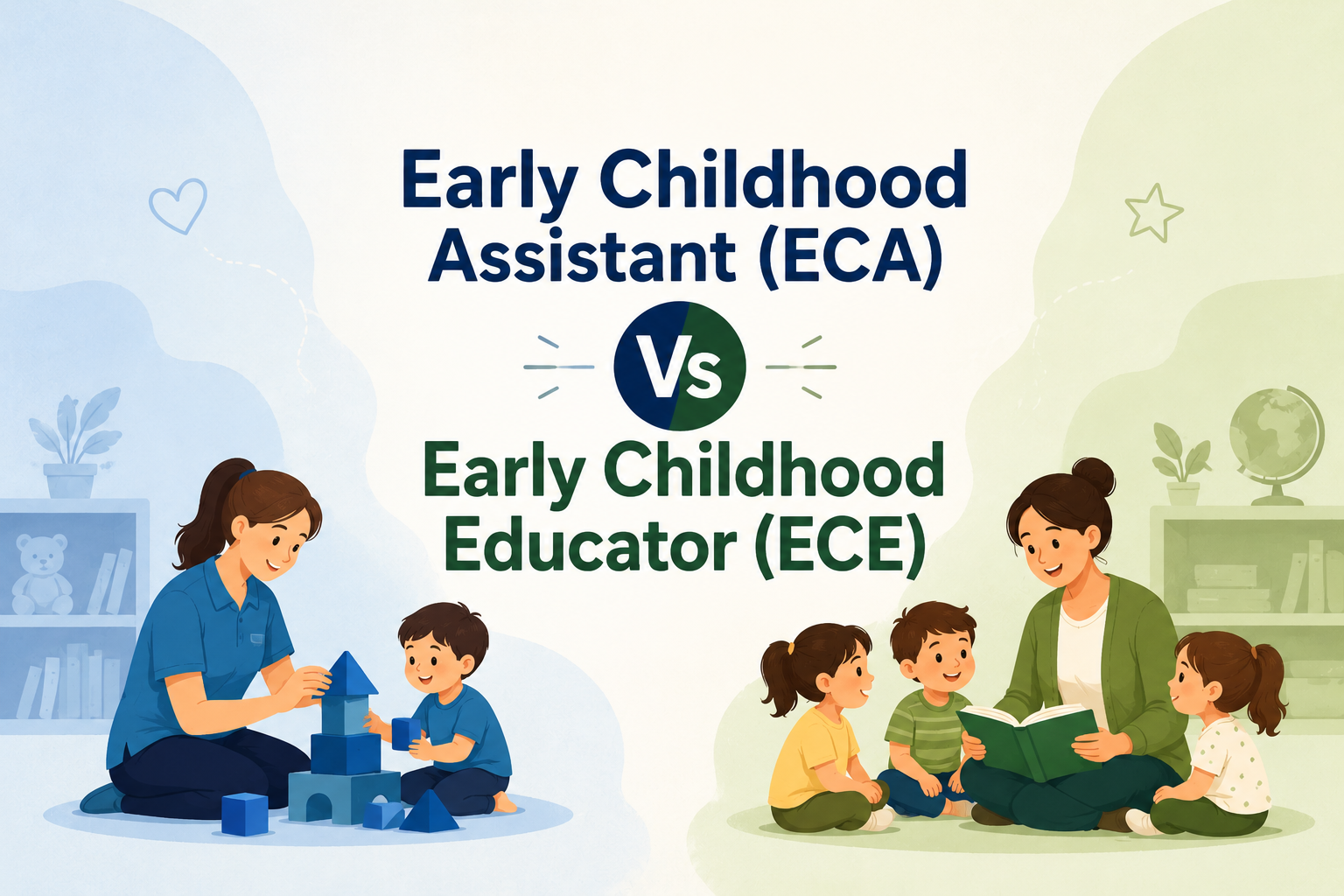
If you are considering a career in childcare, you have probably seen two common career paths: Early Childhood Assistant (ECA) and Early Childhood Educator (ECE). It’s natural to ask what’s the difference between ECA and ECE, and which is the right choice for your goals.
The good news is that both careers are vital in supporting children’s learning, development and well-being. They work side by side in the childcare setting, but have different education, responsibilities, career pathways and professional requirements.
Which career should you choose?
It depends on what you want to do. Want to get started sooner and get some valuable hands-on experience? Become an Early Childhood Assistant. It’s a great first step. You can always do an ECE diploma down the track if you want to broaden your qualifications later.
1. What is an Early Childhood Assistant (ECA)?
An Early Childhood Assistant (ECA) is a qualified childcare provider who helps with learning and self-care for young children in licensed childcare settings. Early Childhood Assistants work with Early Childhood Educators and childcare supervisors to help create a safe, stimulating and positive environment where children can learn through play and everyday experiences.
An ECA is a great career choice for people who love working with kids and want to get into the childcare field in Ontario quickly with practical, hands-on training.
2. What is an Early Childhood Educator (ECE)?
An Early Childhood Educator (ECE) is a trained professional who develops and delivers educational programs that support children’s social, emotional, physical and cognitive development.
ECE design age-appropriate learning experiences for each child, observe children’s development, communicate with families, and help ensure children meet key developmental milestones.
In Ontario, individuals who wish to work as an ECE must complete an approved Early Childhood Education diploma and register with the College of Early Childhood Educators (CECE) to become a Registered Early Childhood Educator (RECE).
Although ECEs have additional responsibilities, both ECEs and ECAs work together to create positive learning experiences and support children’s healthy development.
3. Difference Between ECA and ECE
The table below is a quick comparison to help you understand which career path is right for you.
3.1 Education Requirements for ECA and ECE
The education required to become an early childhood assistant (ECA) is different from that of an early childhood educator (ECE).
| Category | Early Childhood Assistant (ECA) | Early Childhood Educator (ECE) |
| Program Length | Generally shorter, 8-10 Months | Typically 8 Months – 2 Years |
| Program Focus | Practical childcare skills and classroom support. | Child development, curriculum planning, and leadership in early learning. |
| What You’ll Learn | Child safety, classroom support, daily childcare routines, communication skills, play-based learning, and professional behaviour. | Child development, curriculum planning, observation techniques, child psychology, family engagement, inclusive education, health and nutrition, and professional ethics. |
| Practical Training | Includes hands-on training to prepare students for real childcare environments. | Includes field placements and practical experience in licensed childcare settings. |
| Professional Registration | Registration is not required in Ontario. | Graduates can apply for registration with the College of Early Childhood Educators (CECE). |
| Career Outcome | Prepares graduates for assistant roles in childcare centres, daycares, and early learning programs. | Prepares graduates for educator roles with additional responsibilities and leadership opportunities. |
3.2 ECA vs ECE Roles and Responsibilities
The table below highlights the key responsibilities of each role:
| Area of Responsibility | Early Childhood Assistant (ECA) | Early Childhood Educator (ECE) |
| Classroom Preparation | Prepares classrooms and learning materials before activities begin. | Designs learning environments that support children’s development. |
| Daily Childcare | Assists children with meals, hygiene, nap time, and daily routines. | Oversees children’s well-being while integrating learning into daily routines. |
| Learning Activities | Supports classroom activities and encourages children’s participation. | Plans and leads age-appropriate educational activities. |
| Child Development | Observes children and shares observations with the educator or supervisor. | Monitors, documents, and assesses children’s developmental progress. |
| Curriculum Planning | Assists with activities prepared by the ECE. | Develops and implements play-based learning programs. |
| Family Communication | Share basic daily updates when appropriate. | Communicates with families about children’s learning and development. |
| Behaviour Support | Encourages positive behaviour and assists with classroom management. | Implements behaviour guidance strategies and supports children’s emotional development. |
| Safety & Supervision | Supervises children during indoor and outdoor activities while maintaining a safe environment. | Ensures compliance with childcare regulations, health, and safety standards. |
| Leadership | Works collaboratively with educators and supervisors. | Leads the classroom and mentors assistants when required. |
| Documentation | Assists with routine classroom records. | Maintains developmental observations, assessments, and required documentation. |
“Want a real-world look? Watch our short video on the Do’s and Don’ts of an Early Childhood Assistant to see best practices in action in Ontario classrooms.”
4. Where Do ECA and ECE Professionals Work?
Early Childhood Assistants (ECAs) and Early Childhood Educators (ECEs) operate in Ontario’s licensed early learning and childcare sector, educating children from infancy to school age.
These positions are frequently found in licensed childcare programs governed by Ontario’s Child Care and Early Years Act, 2014, which establishes guidelines for personnel, safety, and program quality.
Common Workplaces Include:
- Licensed childcare centres and daycares
- Nursery schools and preschool programs
- Montessori and private early learning centres
- Before and after school programs
- Kindergarten support settings
- Community-based programs such as EarlyON Child and Family Centres
- Private and non-profit childcare facilities
With experience and registration as a Registered Early Childhood Educator (RECE), professionals can also move into:
- Lead educator roles
- Program coordinator positions
- Centre supervisor or director roles
5. ECA vs ECE Salary in Ontario
Salary is one of the most important considerations for students when deciding between becoming an Early Childhood Assistant (ECA) or an Early Childhood Educator.
ECA vs ECE Salary (Ontario – Quick Comparison)
| Category | ECA (Assistant) | ECE (Educator) |
| Median Hourly Wage | ~$22.00/hour | ~$22.00/hour |
| Low Range | ~$17.60/hour | ~$17.60/hour |
| High Range | ~$31.00/hour | ~$31.00/hour |
Reference –
- Early Childhood Assistant Ontario Wages – Job Bank
- Early Childhood Educator Ontario Wages – Job Bank
6. Pros and Cons of ECA vs ECE
Both Early Childhood Assistants (ECAs) and Early Childhood Educators (ECEs) offer rewarding opportunities to make a positive impact on children’s lives. However, each career path comes with its own advantages and challenges. Understanding these can help you choose the option that best aligns with your career goals.
| Career Path | Pros | Cons |
| Early Childhood Assistant (ECA) | 1. Faster entry into the workforce 2. Shorter diploma program 3. Practical, hands-on childcare training 4. Lower education costs 5. Excellent foundation for a childcare career | 1. Limited responsibilities compared to an ECE 2. Career growth may require additional education |
| Early Childhood Educator (ECE) | 1. Higher level of responsibility 2. Leadership opportunities 3. Professional recognition (RECE) 4. Greater long-term career advancement. | 1. Longer educational commitment 2. Professional registration required. 3. Increased responsibility and documentation. |
7. Frequently Asked Questions
7.1 Is ECE higher than ECA?
Yes. ECE is a regulated profession in Ontario with additional educational requirements and professional responsibilities. However, ECAs play an equally important role by supporting children’s daily care and learning in licensed childcare settings.
7.2 Can I work in a daycare as an ECA?
Yes. Many licensed childcare centres, daycares, and early learning programs hire Early Childhood Assistants to support classroom activities and children’s daily routines.
7.3 Is registration required for an ECA?
No. Unlike ECEs, Early Childhood Assistants are not required to register with the College of Early Childhood Educators in Ontario.
7.4 Is ECA a good career?
Absolutely. An Early Childhood Assistant career is ideal for individuals who enjoy working with children and want to enter the childcare field quickly. It offers meaningful work, practical experience, and opportunities to grow within Ontario’s early learning sector.
7.5 Is ECE in demand in Ontario?
Yes. Ontario continues to experience strong demand for qualified childcare professionals, including both ECAs and Registered Early Childhood Educators (RECEs), as childcare services continue to expand across the province.
7.6 Which program should I choose: ECA or ECE?
If you want to start working in childcare immediately, an Early Childhood Assistant (ECA) program is a wonderful alternative to develop practical, job-ready experience. You can eventually pursue an Early Childhood Education (ECE) qualification if your goals are leadership positions, curriculum development, or becoming a Registered Early Childhood Educator (RECE).
8. Conclusion
Choosing between ECA and ECE is not about choosing the “better” career, but rather the career that best matches your goals.
If you want to get into working with children sooner and get experience and make a difference in a classroom, becoming an Early Childhood Assistant (ECA) is a great career choice. It offers practical, employment-ready training and opens the door to rewarding opportunities in Ontario’s growing childcare sector.
An ECA can also be a solid starting point for someone who wants to pursue an ECE diploma in the future. After getting useful experience in the sector, many experts decide to follow this route.
No matter which path you take, both ECAs and ECEs play a crucial role in helping children learn, grow, and thrive throughout their most important developmental years.

8.1 Start Your Career as an Early Childhood Assistant
The 40 week Early Childhood Assistant diploma program at A1 Global College will assist you in starting a fulfilling career in childcare.
Our curriculum is meant to provide you real-world, hands-on training that will get you ready for actual childcare settings. In order to begin your career in Ontario’s licensed childcare industry, you will acquire the knowledge, self-assurance, and professional abilities that employers are seeking.
Study the Early Childhood Assistant program at A1 Global College right now to start along the path to a fulfilling career working with children.