

Table of Contents
Medical Office Administration is one of the most essential yet often overlooked roles in Canada’s healthcare system. While doctors and nurses provide direct patient care, it is the administrative professionals behind the scenes who ensure that clinics, hospitals, and healthcare facilities operate smoothly every single day.
From scheduling appointments, managing patient records, coordinating billing and supporting digital healthcare systems, Medical Office Administrators form the operational backbone of modern healthcare.
In Ontario, demand for skilled healthcare administrative professionals continues to grow due to an aging population, expanding healthcare services, and the widespread adoption of digital medical systems.
According to the Government of Canada Job Bank, employment prospects for medical administrative roles in Ontario remain “Very Good” over the coming years due to sustained demand across healthcare settings.
1. What Is Medical Office Administration?
Medical Office Administration refers to the management and coordination of administrative functions within healthcare environments such as clinics, hospitals, and private practices.
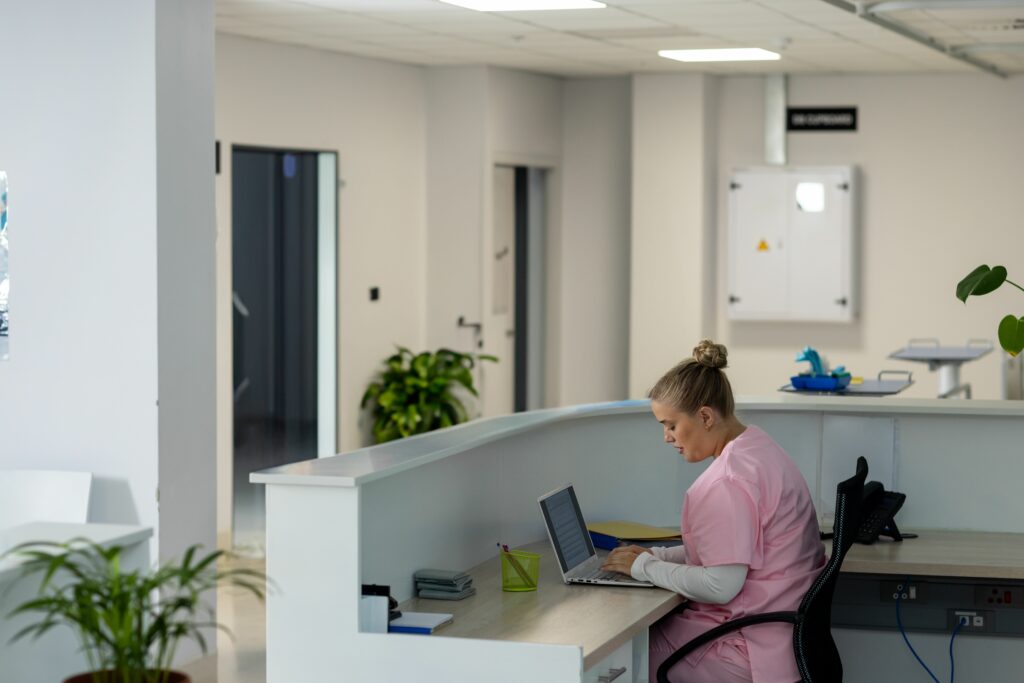
Unlike clinical staff, Medical Office Administrators do not provide medical treatment. Instead, they ensure that the healthcare system operates efficiently by handling the organizational and communication side of patient care.
Core purpose of Medical Office Administration:
- Organizing patient information
- Managing appointments and scheduling
- Supporting healthcare professionals
- Maintaining confidential medical records
- Handling billing and insurance processes
- Ensuring smooth communication between patients and providers
In simple terms, they keep the healthcare system running efficiently behind the scenes.
1.1 Medical Office Administration vs General Office Administration
| General Office Administration | Medical Office Administration |
| Works in multiple industries | Works in healthcare settings |
| General documentation | Medical records and reports |
| Standard scheduling | Patient appointment coordination |
| Basic software tools | EMR/EHR healthcare systems |
| General communication | Patient and clinical communication |
| Standard privacy rules | PHIPA healthcare privacy compliance |
Medical Office Administration requires specialized knowledge of healthcare systems, patient confidentiality laws, and medical terminology.
“As healthcare administration continues to evolve, training programs have also adapted to meet changing workplace expectations. Learn more about Why A1 Global College Upgraded from Medical Office Assistant (MOA) to Executive Medical Office Assistant program (EMOA).”
2. Why Medical Office Administration Is So Critical
Healthcare systems across Canada are under increasing pressure. Ontario in particular continues to experience rising demand for healthcare services because of population growth and..
2.1 Aging Population
Canada’s population is aging rapidly. According to Statistics Canada, By 2030, seniors could represent from 21.4% to 23.4% of the total population.
Older populations require more frequent medical care, increasing administrative workload in healthcare facilities.
2.2 Digital Healthcare Transformation
Modern healthcare is heavily digitalized, including:
- Electronic Medical Records (EMRs)
- Online booking systems
- Virtual consultations
- Digital referrals
- Automated billing systems
Canada Health Infoway reports continued growth in digital health adoption across Canadian healthcare systems.
This shift has increased the demand for administrators who are comfortable with healthcare technology.
2.3 Healthcare Efficiency Depends on Administration
Efficient Medical Office Administration directly impacts:
- Patient wait times
- Accuracy of medical records
- Communication between departments
- Billing accuracy
- Overall patient experience
The Canadian Institute for Health Information (CIHI) emphasizes the importance of accurate health information systems in improving healthcare delivery.
3. A Day in the Life of a Medical Office Administrator
To understand the role clearly, here is a best realistic breakdown of a typical day in life of a Medical Office Administrator in Ontario.
Phase 1 – 8:00 AM – Start of Day
- Open clinic systems
- Review schedules
- Check physician messages
- Confirm appointments
Phase 2 – 10:00 AM – Patient Flow Begins
- Register new patients
- Verify health cards
- Manage walk-ins
- Update EMR systems
Phase 3 – 12:30 PM – Midday Operations
- Coordinate physician requests
- Handle patient calls
- Process referrals
- Manage schedule changes
Phase 4 – 2:30 PM – Administrative Work
- Update medical records
- Process insurance forms
- Prepare billing documents
- Communicate with labs or specialists
Phase 5 – 4:30 PM – End of Day Tasks
- Confirm next-day appointments
- Organize patient files
- Secure confidential records
- Close system logs
Medical Office Administration requires multitasking, accuracy, and strong communication skills throughout the day.
4. Medical Office Administrator Responsibilities & Skills
Medical office assistant duties and responsibilities often include coordinating patient appointments, registering patients, managing medical records, processing referrals, supporting billing and insurance procedures, and communicating with patients, physicians, laboratories, and pharmacies.
To perform these duties successfully, Medical Office Administrators need a combination of technical knowledge and professional skills, including:
- Electronic Medical Records (EMR/EHR) systems
- Medical terminology and healthcare documentation
- Billing and office software proficiency
- Strong communication and customer service skills
- Attention to detail and accuracy
- Time management and organizational skills
- Problem-solving and professionalism
- Knowledge of PHIPA, patient confidentiality, and healthcare privacy requirements
These skills help ensure smooth healthcare operations while supporting both patients and healthcare professionals.

5. Where Medical Office Administrators Work in Ontario
- Family physician clinics
- Hospitals
- Walk-in clinics
- Specialist offices
- Diagnostic centres (MRI, X-ray, ultrasound)
- Long-term care homes
- Community health centres
Hospitals and clinics are the largest employers in this field across Ontario.
Check out job listings on LinkedIn and Indeed for “Medical Office Administrator” to explore current openings and hiring trends in Ontario.
6. Medical Office Administrator Salary in Ontario (2026)
According to the Government of Canada Job Bank Medical Office Administrator Hourly wages in Ontario is as follows:-
- Entry-level: ~$17.60–$24.54/hour
- Median: ~$25/hour
- Experienced: Up to ~$36.06/hour
Salary factors:
- Experience level
- Healthcare setting (hospital vs clinic)
- Software skills (EMR proficiency)
- Additional responsibilities
7. Is Medical Office Administration a Good Career?
Medical Office Administration can be a rewarding career for individuals who enjoy organization, communication, and working in a healthcare environment. It offers strong job stability, opportunities for growth, and the chance to work across a variety of healthcare settings in Ontario. Career outlook remains strong due to an aging population, healthcare expansion, workforce retirements, and the increasing use of digital healthcare systems.
Career Growth in Medical Office Administration
This career also offers a clear pathway for professional growth. Many individuals start in entry-level front-desk roles and gradually move into more advanced administrative and management positions as they gain experience and develop stronger healthcare and technology skills.
| Career Stage | Typical Role |
| Entry Level | Medical Receptionist |
| Intermediate | Medical Office Administrator |
| Advanced | Senior Medical Office Administrator |
| Leadership | Clinic Coordinator |
| Management | Office Manager |
| Senior Management | Healthcare Operations Manager |
As healthcare services continue to expand and become more technology-driven, Medical Office Administration remains a future-focused career path with long-term opportunities for individuals looking to grow within the healthcare industry.
8. Conclusion
Medical Office Administration is a vital part of Canada’s healthcare system. As healthcare continues to evolve through digital technologies, increased patient demand, and more complex administrative processes, the need for skilled healthcare administrative professionals continues to grow.

For individuals seeking a stable, meaningful, and future-focused career in healthcare without direct clinical training, Medical Office Administration offers a strong entry point into the industry. Programs such as the Executive Medical Office Assistant (EMOA) Diploma at A1 Global College are designed to prepare students for today’s healthcare workplaces by combining administrative, technological, and professional skills that employers value. With training in areas such as medical office procedures, healthcare communication, electronic records management, and workplace readiness, graduates can confidently pursue opportunities across a variety of healthcare settings in Ontario.