
Table of Contents
A career in health care offers the opportunity to support people who need assistance with their daily lives. From helping older adults maintain their independence to supporting patients in care facilities, health care assistants play an important role in the delivery of personal care and everyday support.
If you are considering a health care assistant program, you may want to understand what the training involves, which qualifications you need, where you can work after graduation and how to choose the right school.
This guide explains the main aspects of health care assistant training, with a focus on Ontario, Canada.
1. What Is a Health Care Assistant Program?
A health care assistant program is a training pathway designed to prepare students for roles that involve assisting people with personal care, daily activities and general well-being.
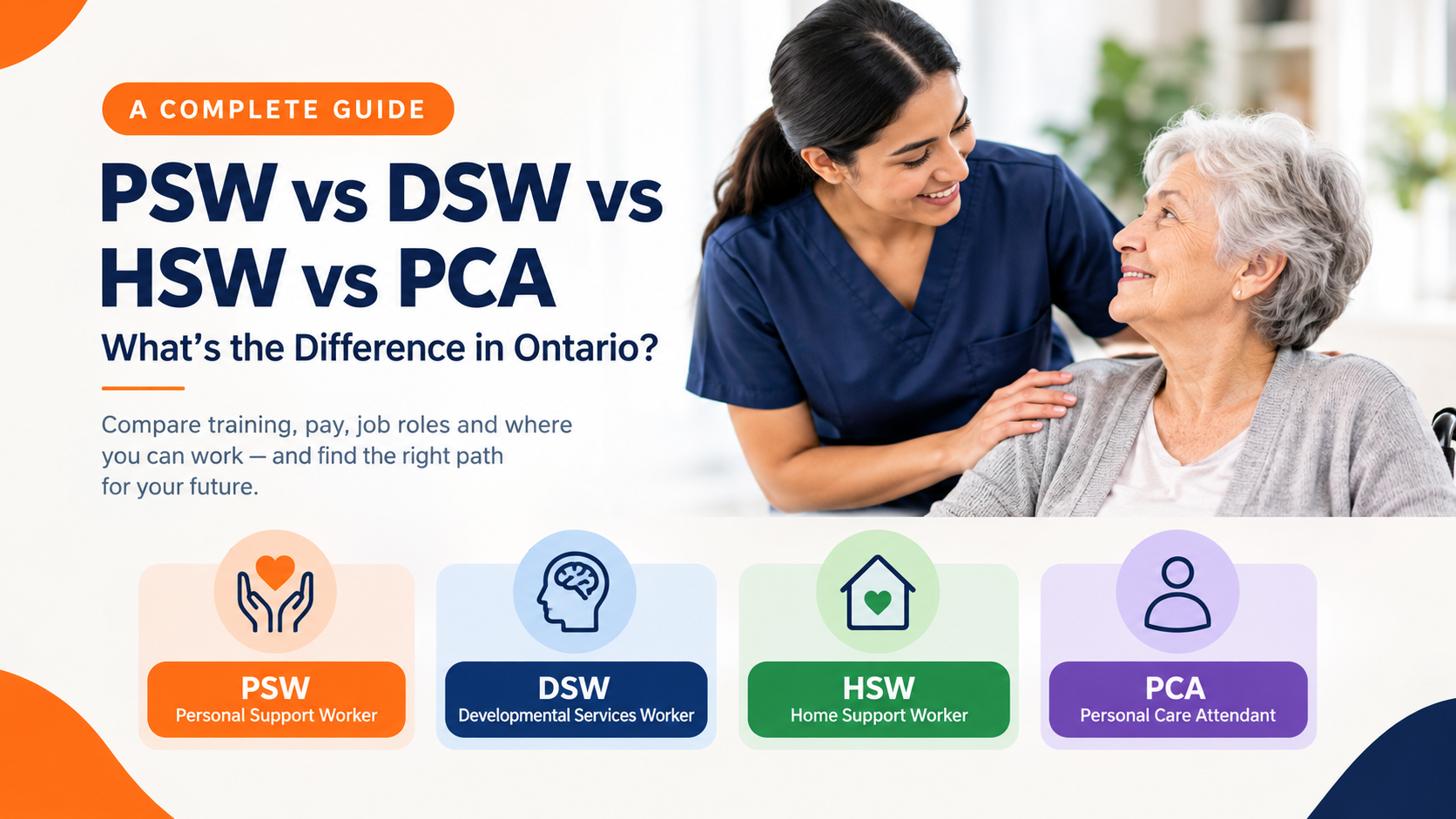
Depending on the institution and province, similar training may be offered under different program names, including Health Care Assistant (HCA), Health Care Aide (HCA) and Personal Support Worker (PSW).
In Ontario, Personal Support Worker (PSW) is a common pathway for people interested in providing hands-on personal care and support. Health care assistants and related support workers may work with older adults, people with disabilities, individuals recovering from illness and others who need help with everyday activities.
The purpose of the training is to develop the practical knowledge, communication skills and professional judgment needed to provide safe, respectful and person-centred care.
2. What Does a Health Care Assistant Do?
The responsibilities of a health care assistant depend on the workplace, the individual’s training and the needs of the people receiving care.
Common duties may include:
- Assisting with daily activities: Helping individuals with dressing, grooming, bathing, eating and other personal care tasks, according to their care plans and the worker’s authorized responsibilities.
- Supporting mobility: Helping individuals move safely, change positions or use mobility aids when trained to do so.
- Providing companionship: Offering conversation, emotional support and respectful social interaction.
- Observing changes in well-being: Recognizing and reporting changes in a person’s condition, behaviour or usual routine to the appropriate health care professional.
- Maintaining a safe environment: Following hygiene procedures, infection prevention practices and workplace safety guidelines.
- Supporting independence: Encouraging individuals to participate in activities they can perform safely rather than taking over every task.
- Communicating with the care team: Sharing relevant observations and following instructions from nurses, supervisors and other authorized professionals.
Health care assistants do not replace nurses or other regulated professionals. Their responsibilities must remain within their training, assigned duties and workplace policies.
3. What Will You Learn in a Health Care Assistant Program?
The subjects taught in a health care assistant course vary by school and credential. A suitable program should cover the knowledge and practical skills relevant to the occupation it prepares students to enter.
Common learning areas include the following.
3.1 Introduction to Health Care
Students learn about health care settings, the responsibilities of support workers, professional conduct and the importance of respecting individual needs.
3.2 Personal Care Skills
Training may cover assistance with bathing, dressing, grooming, eating and other activities of daily living. Students learn to protect privacy, dignity and independence while providing support.
3.3 Human Anatomy and Physiology
Basic knowledge of the human body helps students understand physical changes, common health conditions and the importance of reporting concerns.
3.4 Communication Skills
Students develop communication techniques for interacting with clients, families, colleagues and supervisors. Training may also address communication challenges associated with cognitive impairment or other health conditions.
3.5 Infection Prevention and Control
Students learn appropriate hand hygiene, cleaning practices, the use of personal protective equipment and other procedures that help reduce the spread of infection.
3.6 Safety and Emergency Awareness
Courses may cover safe mobility assistance, fall prevention, emergency response, workplace hazards and the importance of following established procedures.
3.7 Supporting Older Adults and People with Disabilities
Students learn about age-related changes, common care needs, accessibility, respectful assistance and ways to promote quality of life.
3.8 Practical Training or Placement
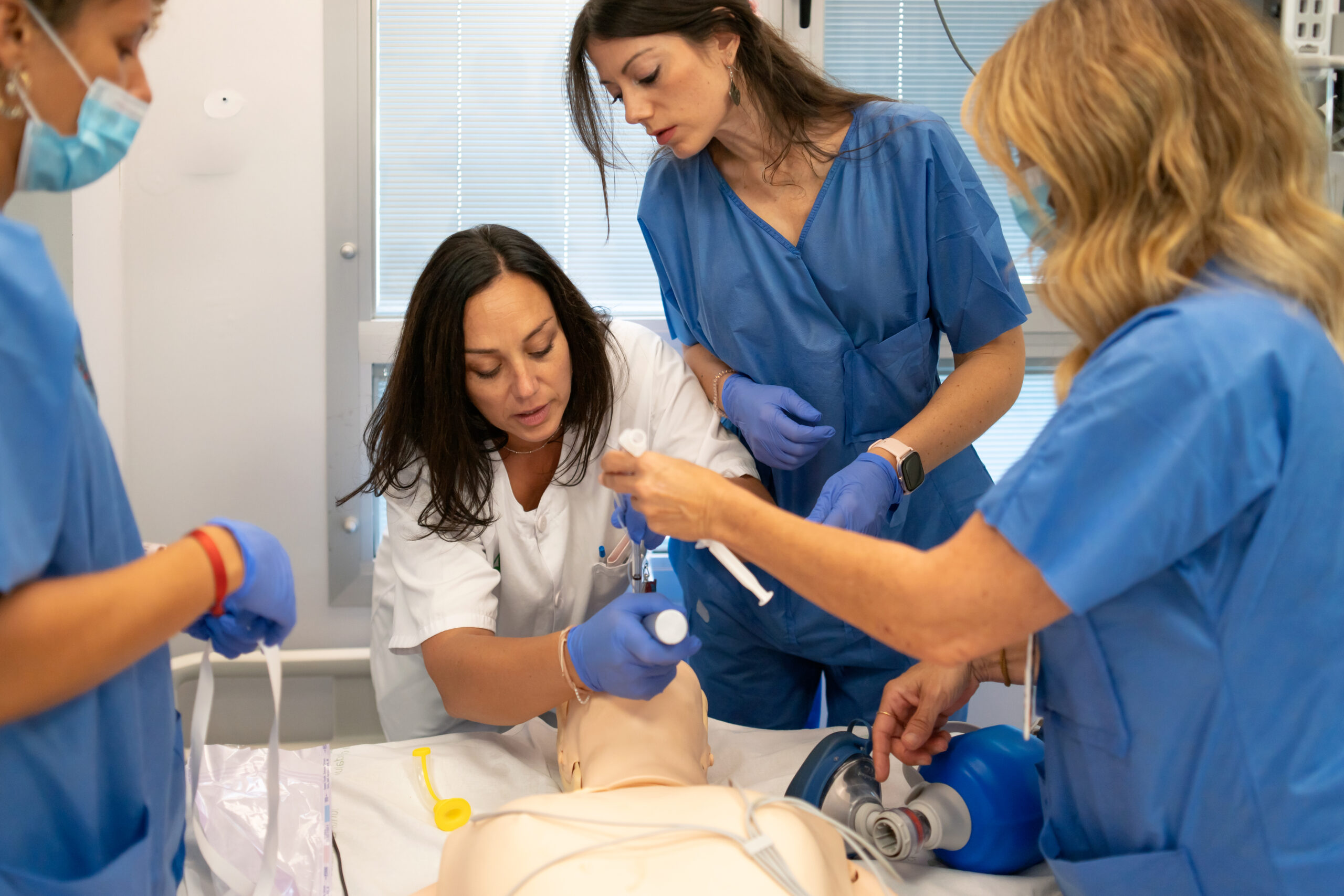
Depending on the program, students may participate in supervised practical learning or a placement. This allows them to apply classroom knowledge in a care environment and develop confidence with real-world responsibilities.
Before enrolling, review the program curriculum and confirm whether practical training is included, where it takes place and what requirements must be completed before placement.
4. What Are the Admission Requirements?
Admission requirements depend on the institution, program and credential. If you are planning to study in Ontario, check the requirements for the specific program rather than assuming every health care assistant course has the same entry criteria.
For an Ontario PSW program, common considerations include:
- Educational qualifications: A high school diploma or equivalent is a typical entry pathway. Some institutions may have additional admission options or requirements.
- Language proficiency: Students may need to demonstrate sufficient English or French proficiency to understand instruction, communicate clearly and complete assessments.
- Health and safety documentation: Immunization records, health clearances or other documentation may be required for clinical placements, depending on the provider and placement site.
- Vulnerable sector screening: A vulnerable sector check is an important consideration for placements involving vulnerable individuals. Requirements and timing should be confirmed with the school.
- Additional certifications: First aid or CPR certification may be required by some programs or employers.
5. How Long Does a Health Care Assistant Program Take?
The duration of a health care assistant program depends on the province, institution, course structure and credential.
In Ontario, the provincial government states that PSW certificate programs can take approximately 5 to 8 months, although other programs and schedules may take longer.
Always Check for:
- Total instructional hours.
- The balance between classroom learning and practical training.
- Whether placement hours are included in the advertised duration.
- Full-time, part-time, online or hybrid delivery options.
- Attendance requirements and the expected completion date.
A shorter program is not automatically the best choice. The curriculum, practical experience and suitability of the credential for your intended career are equally important.
6. Where Can You Work After Completing the Training?
Graduates may pursue relevant support roles in a variety of care settings, depending on their qualifications, practical experience and the employer’s requirements.
6.1 Long-Term Care Homes
Long-term care homes support residents who require ongoing assistance and supervision. Support workers may help with personal care, mobility, daily routines and social well-being.
6.2 Home and Community Care
Some support workers assist individuals in their homes or community settings. Their responsibilities may include personal care, mobility support and helping clients maintain daily routines.
6.3 Retirement Homes
Retirement residences may employ care staff to assist residents with varying levels of support needs. The duties and qualifications required depend on the employer and the services offered.
6.4 Hospitals and Other Health Care Facilities
Certain support roles are available in hospitals and other clinical environments. The duties and entry requirements can differ from those of a PSW working in home care or long-term care.
6.5 Community Support Services
Organizations serving people with disabilities or other support needs may offer relevant employment opportunities. Some positions require additional experience, specialized training or specific certifications.
Important: Completing a health care assistant course does not automatically qualify a graduate for every role listed above. Always check the job description and the applicable education, registration and employer requirements.
7. What Is the Difference Between a Health Care Assistant and a Personal Support Worker?
The terminology can be confusing because the same or similar job titles are not used consistently across Canada.
In Ontario, PSW is a widely used occupational and training term. In other provinces, Health Care Assistant or Health Care Aide may be the established name for related roles or training programs.
| Area | Health Care Assistant / Aide | Personal Support Worker |
| Common terminology | Used in several Canadian jurisdictions, including British Columbia | Commonly used in Ontario |
| Main focus | Assistance with daily care and support, depending on the role | Personal care, daily living assistance and individual well-being |
| Typical workplaces | Vary by province and employer | Long-term care, home care and other support settings |
| Training | Depends on provincial standards and the institution | Ontario programs follow applicable provincial PSW training requirements |
| Qualification recognition | Must be checked against the destination province’s requirements | Must be checked against the destination province’s requirements |
These titles should not be treated as automatically interchangeable. Similar job duties do not guarantee that one credential meets another province’s education or registration requirements.
If you plan to study in Ontario, compare programs based on the actual credential awarded, the applicable provincial standards and the occupations for which graduates may qualify.
8. How Much Can a Health Care Assistant Earn in Ontario?
Earnings depend on the job title, location, employer, experience, shift schedule and responsibilities.
A health care assistant, personal support worker and nursing aide may fall under different occupational classifications, so salary figures should be compared carefully.
Before making a career decision, research current wage information through the Government of Canada’s Job Bank and Ontario’s official career resources.
Consider the following factors when reviewing potential earnings:
- Hourly wage: Compare advertised wages for similar positions in your intended city.
- Experience: Entry-level positions and experienced roles may offer different pay.
- Work setting: Long-term care, home care and hospital-based positions may have different compensation structures.
- Shift premiums: Some employers offer additional compensation for eligible evening, night, weekend or holiday shifts.
- Employment arrangements: Full-time, part-time, casual and agency positions can differ in hours, benefits and job security.
Do not rely on a single advertised salary as a guarantee of future earnings. Review recent job postings and official wage data to establish a realistic expectation.
For reference, you can consult the Government of Canada’s Job Bank and Ontario’s health care career resources.
9. Frequently Asked Questions About Health Care Assistant Programs
9.1 Is a health care assistant program worth taking?
It may be a suitable option if you want to work in personal care or related support services and enjoy helping people with their daily needs. Evaluate the credential, training quality, employment requirements and total cost before making your decision.
9.2 Do I need previous health care experience?
Previous experience is not necessarily required for entry-level training programs. However, admission criteria vary by institution, so check the specific program requirements before applying.
9.3 Can international students enrol in a health care assistant program in Ontario?
Eligibility depends on the institution, program, applicable immigration rules and study permit requirements. International students should confirm that the institution and program are eligible for their intended study arrangements before paying tuition or making travel plans.
9.4 Is a health care assistant certificate the same as a PSW certificate?
Not automatically. The names and standards of training programs vary across Canada. In Ontario, confirm whether the program leads to the appropriate PSW credential or another qualification that meets the requirements of your intended position.
9.5 Do health care assistant programs include practical placement?
Some programs include supervised practical training or placement, while others may have different arrangements. Confirm the placement structure, hours and eligibility requirements before enrolling.
9.6 Can I work in another province after graduating in Ontario?
Possibly, but you should not assume your qualification will be accepted everywhere. Review the destination province’s training, employment and registration requirements before applying for positions.
9.7 Where can I find financial assistance for training?
Depending on your circumstances and the program, you may be able to explore government student assistance, school payment arrangements or other eligible funding options. Review current eligibility rules through official sources and confirm whether the specific institution and program qualify.
For information about Ontario’s PSW training pathways and potential support, visit the Ontario government PSW guide.
10. Start Planning Your Health Care Career
Choosing a health care assistant program is an important step towards working in personal care and support services. Understanding the curriculum, admission requirements, placement arrangements and employment expectations will help you select training that aligns with your goals.
If you are planning to study in Ontario, consider whether a Personal Support Worker program is the appropriate pathway for the type of work you want to pursue. Compare available schools, verify the credential and ask questions about practical training before making a decision.
Explore your training options with A1 Global College.
Visit A1 Global College to learn more about its available programs and explore whether its Personal Support Worker program aligns with your educational and career goals. Contact the college directly to confirm current availability, admission requirements, program details and tuition.
Your first step is to gather accurate information and choose a training pathway that prepares you for the responsibilities of working in health care.